

Solar technology is constantly evolving, and bifacial solar panels are setting new standards in energy efficiency. They harness both direct sunlight on the front side and reflected light on the rear, significantly increasing energy production. They are particularly effective in environments with high reflection, such as snow-covered areas or bright surfaces, where they reach their full potential.
For installers, bifacial modules offer a modern and future-proof solution to maximize energy yield and impress customers with innovative technology. In this article, you will learn how bifacial modules work, the advantages they offer, and what to consider when installing them.
What are Bifacial Modules?
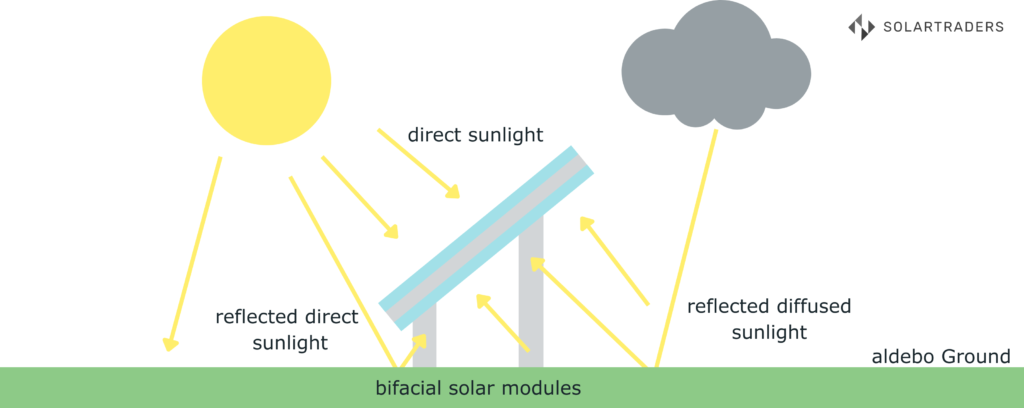
Bifacial solar modules are a new type of photovoltaic system that can generate solar energy on both the front and rear sides. While traditional solar panels only absorb light from the front, bifacial modules also capture reflected light from the back. This means they produce more energy—especially in environments with high light reflection, such as snow-covered areas or mountainous regions.
Manufacturers like JA Solar, Jinko Solar, and Trina Solar offer bifacial modules that stand out for their higher energy efficiency and improved performance in reflective environments. These modules provide a future-proof solution, especially in regions with abundant sunlight and highly reflective surfaces.
Bifacial Gain
Bifacial gain refers to the additional output a bifacial solar module achieves by utilizing the reflected light on its rear side. This extra power is calculated relative to the front side output of the module and depends on the installation environment.
Example:
- Front side output: 350 Wp
- Bifacial gain: 15% (equivalent to an additional 52.5 Wp)
- Total module output: 402.5 Wp
How Does Albedo Affect the Performance of Bifacial Solar Modules?
Albedo is the percentage of sunlight reflected by a surface. For bifacial solar modules, which absorb light on both sides, albedo is particularly important. The higher the albedo of a surface, the more reflected light reaches the rear side of the module, boosting energy yield.
Surfaces with high albedo, such as white concrete (60-80%) or fresh snow (75-90%), can particularly benefit bifacial solar modules. These surfaces reflect more light, significantly increasing energy generation. Light-colored gravel (20-30%) can also be beneficial, while green grass (10-25%) or asphalt (up to 15%) have a lower impact. In urban areas or on water surfaces (5-10%), the additional energy gain from reflected light is limited.
When installing bifacial modules, it is important to consider the albedo of the environment. In areas with high albedo, energy generation can be significantly increased, unlocking the full potential of bifacial solar modules.
Types of Bifacial Solar Modules
Bifacial solar modules come in different designs:
Glass-Film Modules: Lighter and more affordable, perfect for budget-conscious projects.
Full-Black Modules: Stylish and discreet, ideal for rooftops with high design requirements.
BFR Modules: With a black frame for a harmonious look and easy installation.
Glass-Glass Modules: Especially robust and durable, ideal for demanding conditions.
Advantages and Disadvantages of Bifacial Modules: Are They Worth It?
| Advantages | Disadvantages |
| Higher energy yields: Up to 30% more energy production by utilizing reflected light on the rear side. | Higher initial costs: Bifacial modules are approximately 10% more expensive than traditional ones, potentially affecting profitability for smaller projects. |
| Optimal use of reflective surfaces: Improved performance in areas with high reflectivity, such as snow or water. | Increased site requirements: Best suited for environments with reflective surfaces; in urban areas with low reflectivity, additional energy gains may be limited. |
| Longer lifespan: More robust construction and less prone to external influences, resulting in a longer operational life. | More complex installation: Requires precise planning and specialized mounting systems to achieve full potential, leading to additional effort. |
| Reduced land use: Dual energy absorption per square meter minimizes space requirements and lowers environmental footprint. | Higher maintenance effort: The rear side needs regular cleaning to maximize performance, resulting in added maintenance costs. |
| Resistance to weather conditions: High resilience to extreme weather, including wind, snow, and rain. | Sensitivity to shading: Bifacial modules may become less efficient with partial shading or uneven light distribution, as both sides need to be optimized for energy. |
Comparing Bifacial Solar Modules from Leading Manufacturers – Find the Best Solution for Your Project
| Feature | JKM440N-54HL4R-BDV | JKM440N-54HL4R-BDB | TSM-440NEG9RC.27/TC | JAM54D41-440/GB | JAM54D40-440/LB |
|---|---|---|---|---|---|
| Manufacturer | Jinko Solar | Jinko Solar | Trina Solar | JA Solar | JA Solar |
| Nominal Power | 440W | 440W | 440W | 440W | 440W |
| Cell Type | N-type Monocrystalline | N-Type TOPCon | Monocrystalline | Monocrystalline | Monocrystalline |
| Number of Cells | 108 | 108 | 144 | 108 | 108 |
| Module Efficiency | 22.02% | 22.02% | 22.02% | 22.53% | 22.02% |
| Power Tolerance | 0 to 3 W | 0 to 3% | 0 to 5 W | 0 to 3% | 0 to 5 W |
| Temp. Coeff. of P(max) | -0.29%/°C | -0.29%/°C | -0.30%/°C | -0.29%/°C | -0.30%/°C |
| Bifacial Factor | 80±5% | 80±5% | 80±5% | 80±10% | 80±10% |
| Dimensions (L x W) | 1762 x 1134 mm | 1762 x 1134 mm | 1762 x 1134 mm | 1722 x 1134 mm | 1752 x 1134 mm |
| Weight | 22.0 kg | 25.4 kg | 21.0 kg | 21.5 kg | 22.0 kg |
| Product Warranty | 15 years | 25 years | 25 years | 12 years | 25 years |
| Performance Warranty | 30 years at 87% | 30 years at 87% | 30 years at 87% | 30 years at 87% | 30 years at 87% |
Summary:
JAM54D40-440/LB: Versatile module with a durable design, ideal for long-term installations.
JKM440N-54HL4R-BDV: Efficient N-type module, ideal for stable energy production under various conditions.
JKM440N-54HL4R-BDB: High-performance module with innovative TOPCon technology for maximum reliability.
TSM-440NEG9RC.27/TC: Monocrystalline module with a wide cell structure, perfect for high-energy-demand applications.
JAM54D41-440/GB: Highly efficient module with an excellent bifacial factor, optimal for compact and high-yield installations.
Applicable Installation Scenarios for Bifacial Modules

Large-scale Ground-mounted PV Systems: Bifacial solar modules offer a clear advantage in solar parks by utilizing reflected sunlight from the ground. They are particularly effective in regions with high ground reflection, such as sand or light vegetation, increasing energy production.

Commercial Roof Installations: On large, reflective commercial rooftops, bifacial solar modules capture light from both above and from the roof surface, increasing energy yields and reducing the carbon footprint.

Carport Installations: Installed on carports, bifacial solar modules use both direct sunlight and reflection from below, boosting efficiency while providing shade for vehicles.
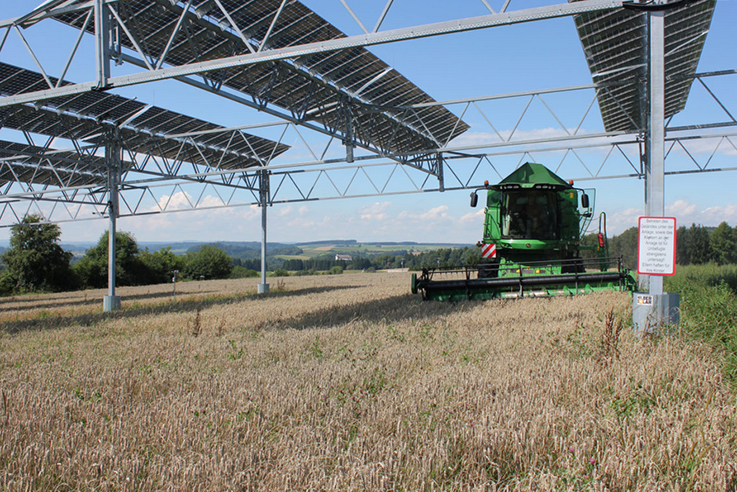
Agricultural Photovoltaics: Bifacial modules over agricultural land capture additional reflected sunlight, allowing for dual land use for energy generation and farming.
Optimal Mounting: How to Install Bifacial PV Modules Correctly
Angle and Orientation:
Bifacial solar modules should be installed at an optimal angle to capture both direct and reflected sunlight. A horizontal or inclined orientation in areas with high reflection, such as snow or sand, can increase yield.
Reflective Surfaces:
Modules benefit most from reflective light, such as from snow, water, or bright surfaces. These surfaces increase energy yields.
Ground Clearance:
A clearance of 20-30 cm between the modules and the ground ensures that reflected light hits the rear side of the modules unimpeded and prevents dirt accumulation.
Avoid Shading:
Make sure no trees or buildings cast shadows on the modules. Shading reduces energy production, especially on the rear side.
Regular Cleaning:
The rear side of the modules should be regularly cleaned to remove dirt and dust, maximizing performance.
Mounting System:
Use a mounting system that securely holds the modules and ensures the necessary clearance from the ground to effectively use reflected light.
Weather Considerations:
In areas with extreme weather, such as strong winds or heavy snowfall, the mounting system should be robust enough to protect the modules.
Monitoring:
A monitoring system helps track the performance of the modules and detect any issues early.
Cost-Benefit Analysis:
Bifacial modules are more expensive, but their higher energy yield can pay off in the long term. Be sure that the investment is worthwhile.
Conclusion: Bifacial Solar Modules for a Future-Proof Installation
Bifacial solar modules offer installers an ideal opportunity to maximize energy yields and implement future-proof projects. Their ability to capture both direct sunlight and reflected light makes them especially suitable for ground-mounted systems, agricultural photovoltaics, or installations in light-reflective environments.
With high efficiency, longevity, and flexibility, these modules provide versatile applications and a clear competitive advantage. Considering factors such as albedo, ground clearance, and shading is crucial to unlocking their full potential.
Thanks to their innovative technology, bifacial modules contribute not only to the energy transition but also to reducing the carbon footprint.
On Solartraders.com, you’ll find a wide selection of bifacial solar modules—perfect for impressing your customers with state-of-the-art photovoltaic technology and ensuring long-term success.


 English
  German